Showing posts with label Church / Temple. Show all posts

Sunday, February 13, 2011

United Arab Emirates - Dubai (Abu Dhabi)

The United Arab Emirates stands apart from the rest of the Middle East as one of the most Western of the countries in the region. Still teeming with a rich and vast Arabic and Muslim history, this country is nevertheless a modern hub of old blended in with the new. Starting point for visitors is Dubai, officially called Abu Dhabi. It is the largest city in the United Arab Emirates, and also one of the most luxurious, modern, and excessive places on the planet.


Wild Wadi
Water park in Dubai. If you’re staying at the Burj al Arab or the Jumeirah Beach Hotel you get free unlimited access. For everyone else - it's pretty pricey; AED180 for adults (£24 GBP) and AED150 for kids (£20 GBP). It's Disney like, but in an Arabic way.
Burj Khalefa
In Burj Khalifa, there is the highest tower at the moment, the biggest mall, the best fountain show in the world many bars and restaurants.You can enjoy Burj khalifa by going to the 136th floor and have a view of Dubai. Mall has a very nice aquarium and lot of shop. When walking through the mall you will see a huge shark tank, that means you're on the right track.


Heritage House
Free museum in Deira is a restored merchant's house from 1890. It is built in the traditional "courtyard" style, and videos set-ups display the original functions of each room (in English and Arabic). The staff even seat you in the inner courtyard and serve you a traditional meal and tea (free) to get more of a taste of how it must have been to be rich and living in Dubai a hundred years ago.
Jumeirah Beach Residence
JBR is a 1.7 km long, 2 million square metre gross floor area waterfront community located against the Persian Gulf in Dubai Marina. It is the largest single phase residential development in the world and contains 40 towers (36 are residential and 4 are hotels) . "The JBR Walk" restaurant strip is popular location for Al Fresco dining.

Souk Al Bahar
Shopping mall and entertainment spot in the heart of the Dubai. Features over 100 retail shops in a mix of 22 restaurants and lounges framing the souk’s extensive waterfront promenade. Souk Al Bahar translates to "Market of the Sailor" boasts its traditional souk architecture of natural stone corridors, high archways and subdued lighting.
Sundowner Dune Dinner Safari
You get picked up from your hotel around 4pm and driven out into the desert, in the car out to the Dubai Desert Conservation Area. After drive you reach the 'Bedouin' Camp where you have dinner. The camp is a specifically built for tourists it's impressive and the food is wonderful, but your first experience when you arrive is a camel ride.

Sheikh Zayed Mosque
Just before sunset is a great time to visit as you can see it in all its clear blue sky glory and capture it at twilight. Guided tours at 10am (except Friday) Abaya's and Sheila's are provided for the women - men please be modest.
Qasr Al-Hosn
White Fort - oldest building in town was built on 1793. It was used for a fort to defend the only fresh water supply for the town and later on expanding to be a small fort and then the residence fo the Zeikh. It was falsely given the name as white fort, athough only when restoration it was cobered with white paint.

Al Futaisi Island
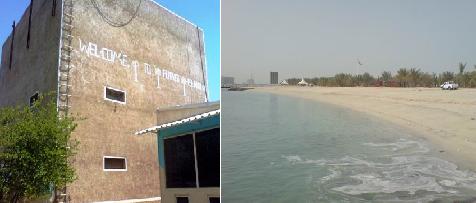
A 50sq km island located of coast Abu Dhabi to the west side. It has several chalet to stay over night and the boat leaves from the port twice a day: 10:00 am and 17:00 pm. With 75 AED/boat ride round trip per person.The island offers a beautiful beach and an unspoiled island to explore. The main attraction is an old fort made of mud brick.
Al Lulu Island
A 1,000 acre man made island located just off the coast of Abu Dhabi completed in 1992. Now it is open for public and has several basic facilities such as public beaches, fresh water lake, some playing parks, cafetarias and sport space.
READ MORE »

Friday, February 11, 2011

Mexico- Chichen Itza and Uxmal

With coastlines along the Gulf of Mexico, the Caribbean, and the Pacific Ocean, Mexico is a unique blend of coastlines, mountains, deserts, and more. It is the seventh major traveler destination according to the WTO, and features some of the most unique beach resorts on the face of the planet. The inexpensive nature of the country means that visitors from all over the world can experience Mexico on a budget that has them living like kings.

Chichen Itza
One of the major centers for the ancient Mayans. Local guides are available who can give you a more detailed trip through the area. The entire city is an ancient site, so walking is the only mode of transportation. There are dozens of buildings to explore in Chichen Itza, ranging from the Temple of the Warriors to the Temple of the Jaguars and the Pyramid of Kukulcan. The surrounding countryside is filled with Mayan ruins as well, meaning you can spend literally weeks here if you want to truly capture the Mayan experience during your trip to the Yucatan.

Uxmal
Ruins which date back to 9th or 10th century and are considered one of the highlights of Puuc (means “hilly country” in Mayan) architecture. The architecture is ornate with elaborately carved stones all over the multi-tiered buildings. They are different than Chichen Itza or Tulum.
Xlapak Mayan Ruins - "Old wall' is a small Maya ruin located 16 miles southeast of Uxmal. Archeological site is divided in two groups: Group 1 is composed of two structures over a basement platform. The most important is the Palace that has 9 rooms  arranged in 3 rows of 3 rooms each. It has 3 entrances at the north side, 3 at the south side and one in each one of the other sides. Above each entrance there are three rows of Chaac masks. Group 2 has a similar building to the Palace of Group 1. This buildings layout and number of rooms is nearly identical to the Palace.

Uxmal Mayan Ruins - Most visible architecture is estimated to have been built between 600 AD and 1100 AD. Uxmal was founded by Hun Uitzil Chac Tutul Xiu around 500 AD. The Xiu family controlled Uxmal until after the Spanish arrival. Before archaeologists began restoration and consolidation activities Uxmal was in better condition than most other Maya sites because of superior construction materials, engineering and work ethic. Most structures were built with well cut stones set into a core of concrete, not relying on plaster to hold the building together. The majority of the structures are built in the Puuc style. The Palace of the Governor is a long low building erected on a huge platform, it is the longest façade in Pre-Columbian Mesoamerica.

The Adivino "Pyramid of the Magician" is unusual in several ways. The perimeter shape is oval, rather than the usual rectangular or square shape. It was a common practice in Mesoamerica to build new temple pyramids directly over older ones, however, the last construction phase of the Adivino (117 ft. tall) was built slightly to the east of the older pyramid, so that on the west side the temple the old pyramid is visible.
The Nunnery Quadrangle  is thought to be the seat of the government. It is the example elaborately carved facades. Both the inside and outside faces of each of the four buildings of this quad have the carved mosaic applied to the upper portions of each. There are 74 small rooms in the four buildings that suraround the courtyard. Each of the four buildings has a unique ornate façade, and each is built on a different level.

Labna Mayan Ruins
Maya site on the Puuc Highway about 10 miles southeast of Kabah. The site was built in the Late and Terminal Classic era. A date corresponding to 862 AD is inscribed in the palace. Labna was named a UNESCO World Heritage Site. It is one of the five main Puuc sites. Structures to see are the Palace with more than 60 rooms, Temple of the Columns, The Mirador atop a pyramidal platform and The Mayan Arch at the entrance of the grand sacbe.
Sayil Mayan Ruins
Located amongst small hills. It was first occupied prior to 250 AD, monumental building began around 600 AD but was at its zenith between 700 AD and 1000 AD. The maximum population is estimated to have been less than 10,000. Sayil was an ally to Uxmal due to its much smaller size and its close proximity.  Structures to visit are El Palacio that is 3 stories tall with 98 room and 280 feet long, El Mirador which is a small 5 room Chenes style structure with a roof comb and the ball court.
Kabah Mayan Ruins
Kabah is 12 miles south of Uxmal and is connected by a sacbe to that city. This sacbe is a grand example at 12 miles long, 16 feet wide, at places more than 20 feet thick, with a monumental arches at both ends. Kabah is the second largest ruin of the Puuc region after Uxmal. Most of the visible architecture was built between the 600 AD to 1000 AD. The most famous structure at Kabah is the "Palace of the Masks", the façade decorated with hundreds of stone masks of the long-nosed rain god Chaac; it is also known as the Codz Poop, meaning "Rolled Matting".
READ MORE »

Saturday, February 5, 2011

Argentina - Buenos Aires

Despite a past littered with military rule and economic disasters, Buenos Aires is starting to get back on its feet.  Most of the modern heartland has one foot firmly in the 21st century: designers and tango, overpaid football players and high-end steak restaurants, cocktails and an outgoing social scene are all highlights.

San Telmo is perhaps Buenos Aires must see district, with its colorful Spanish architecture and streets that crowd with arts and crafts every evening, while the square turns into a huge tuneful tango session night after night.
La Boca is one of the most popular in town. Tourists come here to stroll along the pedestrian streets and street performances to attend. Here you’ll find the famous tango Stada. Main street Caminito is the tourist center of La Boca. It is valued for its colorful houses, souvenirs and art objects which are sold here.
La Recoleta Cemetery- you'll see graves of some of the most important people in Argentinean history. Presidents, scientist, lawyers have been buried there. The most famous grave is that of Eva Peron. Whole cemetery consists of mausoleums. Each mausoleum has the family name engraved into the marble and brass plaques are added to the front with the details of family members. Interesting that no birth date are engraved. Evita Peron's body is buried in the Duarte tomb. Her body had been stolen a couple of times and extreme measures have been taken to secure the tomb.
Evita Museum - run by her grandniece Cristina. Building in which museum is housed was originally used as a temporary home for women and children in 1948 and the structure is seen as a historical monument. Tourists come here to learn more about Evita Peron, the permanent exhibition can admire photos, personal objects, documents, press articles and other exhibits.
Casa Rosada - dating from 1873, built on the foundations of other structures. It’s government headquarters today. Besides massive architecture specific to the 19th century, building is interesting for its pink color.
Main Catholic church - in downtown is a mixture of architectural styles, with a neo-classical facade, and a 19th century domn. Built, demolished and rebuilt several times over the centuries, is today a symbol of the city.
Obelisk - the place where various cultural events are organized. Built in 1936, to celebrate four centuries since the foundation of the city, it was placed in the Plaza of the Republic, with a height of 67m, one of the most interesting monuments of modern South America.
Buenos Aires has also world's most entertaining cold medicine. It's fernet. This wonderful drink makes a sick people very health in just a few shots.
READ MORE »

Wednesday, February 2, 2011

Argentina - Córdoba

Córdoba, abbreviated as CBA, is a city located near the geographical center of Argentina, in the foothills of the Sierras Chicas mountains on the Suquía River, about 700 km west-northwest from Buenos Aires. It is the capital of Córdoba Province.

Córdoba has been Argentina's third most important city since the end of the 16th century, and the second industrial center in the country, but retains many of its historical buildings dating from the colonial era.
The capital of Córdoba and the entire province offer hundreds of activities for visitors to feel at ease. Circuits in the city include the pedestrian promenades joining San Martín Square with the ancient Cathedral, the historical Cabildo, Trejo House and several museums, La Cañada (stream), Basilica Nuestra Señora de la Merced,Basilica Santo Domingo,Capuchinos (Church), Museum Superior de Bellas Artes Evita – Palacio Ferreyra.
When the sun sets, the city presents an active cultural atmosphere and nightlife manifested in the theaters that present a wide range of recreational and artistic performances. Typical music style in Córdoba is called cuarteto (its greatest exponents are famous Mona Giménez and the late Rodrigo) and the way it is danced is another icon in this country.
READ MORE »

Tuesday, January 18, 2011

Russia - Museums in Saint Petersburg

St. Petersburg has no skyscrapers and a relatively low skyline. Current regulations forbid construction of high buildings in the city centre. The 310m tall St. Petersburg TV Tower is the tallest structure in the city, while 122.5 m Peter and Paul Cathedral is the highest building.

Russian Museum - devoted to the Russian fine art specifically. Established 1895 by Nicholas II to commemorate his father, Alexander III. Original collection was composed of artworks taken from Hermitage, Alexander Palace and Imperial Academy of Arts. After Russian Revolution, many private collections were nationalized and relocated to the Russian Museum. Main building of the museum is Mikhailovsky Palace.
Cathedral of St Peter and Paul - first stone church in St. Petersburg, built between 1712 and 1733. Its golden spire reaches a height of 404 ft and features at its top an angel holding a cross. This angel is one of the most important symbols of St. Petersburg. Turned into a museum in 1924 it houses the remains of almost all the Russian Emperors and Empresses from Peter the Greatto Nicholas II and his family to Catherine the Great, Empress of Russia for 34 years. Only Peter II and Ivan VI are not buried here.

Saint Isaac's Cathedral - largest Russian Orthodox cathedral (sobor) in the city was the tallest Eastern Orthodox church upon its completion (surpassed only by the Cathedral of Christ the Saviour). Church was ordered by Tsar Alexander I, to replace Rinaldiesque structure.
Kunstkamera - first museum in Russia. Established by Peter the Greatcompleted in 1727.  Museum was dedicated to preserving "natural and human curiosities and rarities". Tsar's collection, features human and animal fetuseswith anatomical deficiencies, which Peter had seen in 1697 visiting Frederick Ruysch and Levinus Vincent. The underlying idea was to acquire full knowledge of the world.


Russian Museum of Ethnography -houses a collection of about 500,000 items relating to the ethnography, or cultural anthropology, of peoples of the former Russian Empire and the Soviet Union. In the 1830s, the Kunstkamera collections were dispersed to newly established imperial museums, the most important being the Peter the Great Museum of Anthropology and Ethnography, established in 1879.
Central Naval Museum -one of the oldest Russian museums and one of the world's largest naval museums. The museum's history officially started in 1709 with the foundation of Model-kammer by Peter the Great for the conservation of ship drafts and models.

Zoological Museum - Zoological Institute of the Russian Academy of Science, located on Universitetskaya Embankment. It's one of the ten largest nature history museums in the world. Peter the Great's Kunstkamera collections included zoological specimens. In 1724 the museum became a part of the Russian Academy of Sciences.
Varshavsky Rail Terminal - former passenger train station in St. Petersburg, now serving as the Museum of Railway Machinery. The station was originally built in 1851 for a rail line, completed in 1858, from the city to the Tsar's residence in Gatchina. The line was extended in 1859 to Pskov and in 1862 to Warsaw, which at that time was a part of Russian Empire. A branch from the main line that ran to the Prussian border at Virbalis (now Lithuania) connected Saint Petersburg to other capitals of Europe.

St. Petersburg Museum of History- headquarters of the museum are located in the Peter and Paul Fortress. It was established in 1938 as the Museum of History and Development of Leningrad.
Artillery Museum - Since 1869 its collections, founded by Peter I of Russia in 1703 and consisting of Russian and foreign military equipment, uniform and decorations, are hosted in the Kronverk (a crownwork) of the Peter and Paul Fortress on the right bank of the Neva near Alexander Park.
READ MORE »