Showing posts with label Attractions. Show all posts

Thursday, July 7, 2011

Chile - Santiago

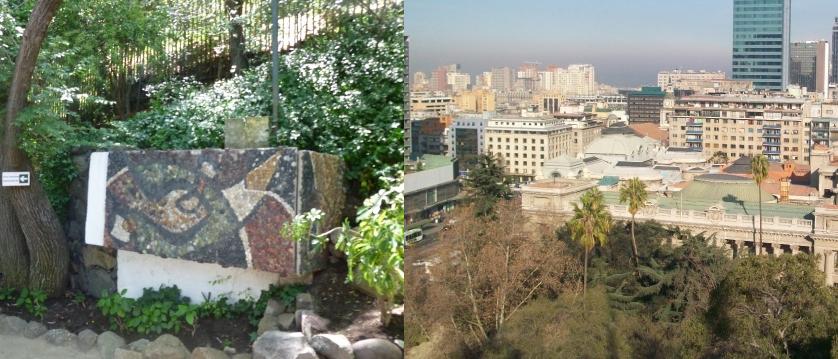
Santiago is often quite a smoggy capital. And in a setting like this, it genuinely is really sad, as when the Chilean capital is having a bright day there are few more spectacular locations for a city in the entire world. Encircled by mighty snow-capped Andean peaks, on the rare days when the smog clears it feels like the city’s been magically lifted high into the stars.

La Chascona 
 Informative in-depth tour to Pablo Neruda's life, a look that goes well beyond the walls of this mansion-like house that Neruda built for his mistress Matilde Urrutia. The place, built to resemble a boat as Neruda loved the sea but he also had a great fear of her, is also built on various levels, with small and big rooms, beautiful balconies overlooking Bellavista and Santiago and rooms that are far away from the main house creating the illusion of a complex of bungalows.
Museo Chileno de Arte Precolombino
For US $6 (3.000 pesos) you can get into the most famous museum of Santiago. It is full of artifacts in great condition with good explanations in Spanish and English. In addition to the permanent exhibit on the second floor of the museum, there are always temporary exhibits on the first floor. If you're in Santiago try to stop by the museum for a few hours.


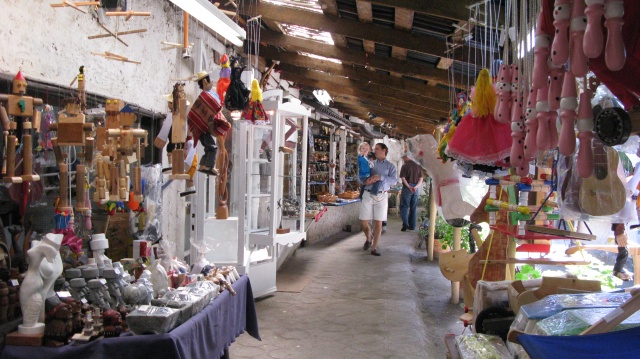
Pueblito los Dominicos
If you like to bring home traditional gifts that reflect the local culture. Pueblito los Dominicos is a small artisan shopping village on the outskirts of Santiago that offers many small shops that carry these types of items. Set on the grounds of an old church and highlighted by the Andes Mountains in the background, this is great place to kill a few hours and get those hard-to-find local gifts to bring home for you family and friends. There are some small cafes that actually have some decent food.
READ MORE »

Saturday, June 25, 2011

Sweden - Stockholm

As a centre that draws designers, musicians and catwalk models, this capital is the perfect host. Pricy and intimate, the ancient influences take nothing away from its intensely fashionable vibe. The entire city is propped up across fourteen different islands, and wherever you turn you’ll find city-center fisherman and waves rolling down the channels.

Gamla stan
The historic centre of Stockholm is a mandatory visit for anyone going to Stockholm. This also makes it the most touristy, and you'll have to wade your way through group tours and ice cream vendors, but once past those you'll appreciate the beauty of this area.
Junibacken
Do you remember the children's books about the little red headed, pig tailed, freckled faced girl named Pippi Longstocking? The one who lived all by herself with her pet monkey Mr. Neilson, and horse in Villa Villakulla? Well, Astrid Lundgren is a very popular childrens author and she and other Swedish childrens authors have their work immortalized in this really cute yellow house just on the island of Djurgarden.Inside you will actually find Villa Villakulla. Kids (and big kids) can walk around and play inside. There's even a community of small houses. Inside you can follow a path to a small town where there a child sized homes.


Skansen
The oldest open-air museum in the world and also a zoological park is located on the island of Djurgården, a royal park near the centre of Stockholm, and open every day of the year, except Christmas Eve. Over the years about 150 historical buildings have been moved here from nearly every part of Sweden. Most of them date from the 18th and 19th centuries. Visitors to the houses and farmsteads are met by historical interpreters in period costume. There are something like 70 different animal species in the Skansen Zoo, the main emphasis being on Scandinavian fauna, which is represented by Nordic wild animals. When Skansen was founded in 1891 a large quantities of trees, bushes and other vegetation were planted here in order to transform the bare rocks into a cultivated oasis.

READ MORE »

Wednesday, June 22, 2011

Costa Rica - San Jose

Costa Rica’s capital is often dismissed as a necessity on route to the country’s beaches and jungles. If you’re on a flying visit to Costa Rica, you could be forgiven for running from the capital to the surrounding paradisos, but if you have a little longer you’ll learn that the intriguing capital is a heartwarming place to lay your hat.

Rainforest Canopy Tour
If you're in Costa Rica and checking out the rain forests, take a canopy tour. Basically, you get to ride a ski-lift type contraption up through the canopy of the rain forest, gliding along a cable one-hundred feet off the ground. Unlike the dense, tangled growth occupying the ground level of the rainforest, the canopy is leafy and airy. The canopy is also the home to much of the life in the rainforest and indeed the world, housing literally millions of different species of animals and plants.

La Fortuna waterfall
One of the most intimate mountain destinations for travelers seeking that extra-special something that sets the destination apart from the major tourist hubs is La Fortuna de San Carlos, otherwise known simply as La Fortuna. Nestled in the shadow of one of the most active volcanoes in the world Arenal Volcano, which has been continually erupting since 1968 on an average of 41 times per day - and smack - dab in the middle of some of the most beautiful countryside in the world with surging waterfalls, hot springs, and lush countryside.

READ MORE »

Sunday, June 19, 2011

China - Beijing

China’s capital Beijing is full of the kind of iconic images it’s impossible not to hunt down. There’s the portrait of Mao staring down upon his mausoleum on Tiananmen Square, expanses of the Forbidden City, plates of roasted duck in the traditional pagoda restaurants and cups of green tea.


GREAT WALL
Construction of the Great Wall began in the 7th Century BC when China was controlled by feudal warlords. It was joined together (along with China) in the Qin Dynasty (221-206 BC). Rebuilt until the 16th Century, the Great Wall's purpose was to protect the northern borders of the Chinese Empire from invaders. Many legends and myths exist regarding the building of this wall. One of the most famous is The Legend of Meng Jiangnü about love and devotion.
CHAOYANG THEATER
The Flying Acrobat Show at the Chaoyang Theater is an incredible feat of artistry and talent. Tickets range in price depending on where you want to sit and how many are in your group but can range from as low as 80 Yuan per ticket (a bad seat with more than 10 purchased) to over 800 Yuan (for a single seat in the best sections).

TEMPLE OF HEAVEN
Four kilometers south of Tiananmen Square, the largest park in Beijing, covering 675 acres. The buildings found here were built at the same time as the Imperial Palace, and they are noted for their exquisite architecture and harmonious placement within the park among rows of cypress trees, some of which are said to be 800 years old. The temple was designed to mark the meeting point between heaven and earth.
SUMMER PALACE
45 minutes outside of Beijing is where the Emperors and Empresses used to go to escape Beijing's oppressive summertime heat. Located at a higher elevation than Beijing and rebuilt after it was destroyed by European troops in 1860, it features many lovely temples, wooded hills, courtyards, gardens and imperial residences with red columns and wood panels painted with landscapes.


READ MORE »

Sunday, February 13, 2011

United Arab Emirates - Dubai (Abu Dhabi)

The United Arab Emirates stands apart from the rest of the Middle East as one of the most Western of the countries in the region. Still teeming with a rich and vast Arabic and Muslim history, this country is nevertheless a modern hub of old blended in with the new. Starting point for visitors is Dubai, officially called Abu Dhabi. It is the largest city in the United Arab Emirates, and also one of the most luxurious, modern, and excessive places on the planet.


Wild Wadi
Water park in Dubai. If you’re staying at the Burj al Arab or the Jumeirah Beach Hotel you get free unlimited access. For everyone else - it's pretty pricey; AED180 for adults (£24 GBP) and AED150 for kids (£20 GBP). It's Disney like, but in an Arabic way.
Burj Khalefa
In Burj Khalifa, there is the highest tower at the moment, the biggest mall, the best fountain show in the world many bars and restaurants.You can enjoy Burj khalifa by going to the 136th floor and have a view of Dubai. Mall has a very nice aquarium and lot of shop. When walking through the mall you will see a huge shark tank, that means you're on the right track.


Heritage House
Free museum in Deira is a restored merchant's house from 1890. It is built in the traditional "courtyard" style, and videos set-ups display the original functions of each room (in English and Arabic). The staff even seat you in the inner courtyard and serve you a traditional meal and tea (free) to get more of a taste of how it must have been to be rich and living in Dubai a hundred years ago.
Jumeirah Beach Residence
JBR is a 1.7 km long, 2 million square metre gross floor area waterfront community located against the Persian Gulf in Dubai Marina. It is the largest single phase residential development in the world and contains 40 towers (36 are residential and 4 are hotels) . "The JBR Walk" restaurant strip is popular location for Al Fresco dining.

Souk Al Bahar
Shopping mall and entertainment spot in the heart of the Dubai. Features over 100 retail shops in a mix of 22 restaurants and lounges framing the souk’s extensive waterfront promenade. Souk Al Bahar translates to "Market of the Sailor" boasts its traditional souk architecture of natural stone corridors, high archways and subdued lighting.
Sundowner Dune Dinner Safari
You get picked up from your hotel around 4pm and driven out into the desert, in the car out to the Dubai Desert Conservation Area. After drive you reach the 'Bedouin' Camp where you have dinner. The camp is a specifically built for tourists it's impressive and the food is wonderful, but your first experience when you arrive is a camel ride.

Sheikh Zayed Mosque
Just before sunset is a great time to visit as you can see it in all its clear blue sky glory and capture it at twilight. Guided tours at 10am (except Friday) Abaya's and Sheila's are provided for the women - men please be modest.
Qasr Al-Hosn
White Fort - oldest building in town was built on 1793. It was used for a fort to defend the only fresh water supply for the town and later on expanding to be a small fort and then the residence fo the Zeikh. It was falsely given the name as white fort, athough only when restoration it was cobered with white paint.

Al Futaisi Island
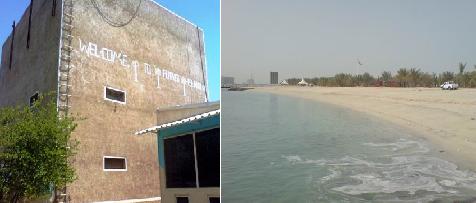
A 50sq km island located of coast Abu Dhabi to the west side. It has several chalet to stay over night and the boat leaves from the port twice a day: 10:00 am and 17:00 pm. With 75 AED/boat ride round trip per person.The island offers a beautiful beach and an unspoiled island to explore. The main attraction is an old fort made of mud brick.
Al Lulu Island
A 1,000 acre man made island located just off the coast of Abu Dhabi completed in 1992. Now it is open for public and has several basic facilities such as public beaches, fresh water lake, some playing parks, cafetarias and sport space.

READ MORE »

Friday, February 11, 2011

Mexico- Chichen Itza and Uxmal

With coastlines along the Gulf of Mexico, the Caribbean, and the Pacific Ocean, Mexico is a unique blend of coastlines, mountains, deserts, and more. It is the seventh major traveler destination according to the WTO, and features some of the most unique beach resorts on the face of the planet. The inexpensive nature of the country means that visitors from all over the world can experience Mexico on a budget that has them living like kings.

Chichen Itza
One of the major centers for the ancient Mayans. Local guides are available who can give you a more detailed trip through the area. The entire city is an ancient site, so walking is the only mode of transportation. There are dozens of buildings to explore in Chichen Itza, ranging from the Temple of the Warriors to the Temple of the Jaguars and the Pyramid of Kukulcan. The surrounding countryside is filled with Mayan ruins as well, meaning you can spend literally weeks here if you want to truly capture the Mayan experience during your trip to the Yucatan.

Uxmal
Ruins which date back to 9th or 10th century and are considered one of the highlights of Puuc (means “hilly country” in Mayan) architecture. The architecture is ornate with elaborately carved stones all over the multi-tiered buildings. They are different than Chichen Itza or Tulum.
Xlapak Mayan Ruins - "Old wall' is a small Maya ruin located 16 miles southeast of Uxmal. Archeological site is divided in two groups: Group 1 is composed of two structures over a basement platform. The most important is the Palace that has 9 rooms  arranged in 3 rows of 3 rooms each. It has 3 entrances at the north side, 3 at the south side and one in each one of the other sides. Above each entrance there are three rows of Chaac masks. Group 2 has a similar building to the Palace of Group 1. This buildings layout and number of rooms is nearly identical to the Palace.

Uxmal Mayan Ruins - Most visible architecture is estimated to have been built between 600 AD and 1100 AD. Uxmal was founded by Hun Uitzil Chac Tutul Xiu around 500 AD. The Xiu family controlled Uxmal until after the Spanish arrival. Before archaeologists began restoration and consolidation activities Uxmal was in better condition than most other Maya sites because of superior construction materials, engineering and work ethic. Most structures were built with well cut stones set into a core of concrete, not relying on plaster to hold the building together. The majority of the structures are built in the Puuc style. The Palace of the Governor is a long low building erected on a huge platform, it is the longest façade in Pre-Columbian Mesoamerica.

The Adivino "Pyramid of the Magician" is unusual in several ways. The perimeter shape is oval, rather than the usual rectangular or square shape. It was a common practice in Mesoamerica to build new temple pyramids directly over older ones, however, the last construction phase of the Adivino (117 ft. tall) was built slightly to the east of the older pyramid, so that on the west side the temple the old pyramid is visible.
The Nunnery Quadrangle  is thought to be the seat of the government. It is the example elaborately carved facades. Both the inside and outside faces of each of the four buildings of this quad have the carved mosaic applied to the upper portions of each. There are 74 small rooms in the four buildings that suraround the courtyard. Each of the four buildings has a unique ornate façade, and each is built on a different level.

Labna Mayan Ruins
Maya site on the Puuc Highway about 10 miles southeast of Kabah. The site was built in the Late and Terminal Classic era. A date corresponding to 862 AD is inscribed in the palace. Labna was named a UNESCO World Heritage Site. It is one of the five main Puuc sites. Structures to see are the Palace with more than 60 rooms, Temple of the Columns, The Mirador atop a pyramidal platform and The Mayan Arch at the entrance of the grand sacbe.
Sayil Mayan Ruins
Located amongst small hills. It was first occupied prior to 250 AD, monumental building began around 600 AD but was at its zenith between 700 AD and 1000 AD. The maximum population is estimated to have been less than 10,000. Sayil was an ally to Uxmal due to its much smaller size and its close proximity.  Structures to visit are El Palacio that is 3 stories tall with 98 room and 280 feet long, El Mirador which is a small 5 room Chenes style structure with a roof comb and the ball court.
Kabah Mayan Ruins
Kabah is 12 miles south of Uxmal and is connected by a sacbe to that city. This sacbe is a grand example at 12 miles long, 16 feet wide, at places more than 20 feet thick, with a monumental arches at both ends. Kabah is the second largest ruin of the Puuc region after Uxmal. Most of the visible architecture was built between the 600 AD to 1000 AD. The most famous structure at Kabah is the "Palace of the Masks", the façade decorated with hundreds of stone masks of the long-nosed rain god Chaac; it is also known as the Codz Poop, meaning "Rolled Matting".
READ MORE »

Wednesday, February 9, 2011

Mexico - Mexico city

Mexico City is a mammoth capital, and can be an intimidating place to navigate. Mexico City’s had more than its fair share of bad press recently. Being at the heart of the swine flu outbreak  as well as a growing reputation for violent crime has done the city no favors, but venture out into this massive capital and you’ll find a city that makes it easy to look past its well-publicized issues.


Plaza de la Constitucion
The second biggest square in the world. A colossal Mexican flag dominates the centre, while the periphery is home to fading old buildings and often hosts festivals. Both the architectural mish-mash of the cathedral Metropolitana and the National Palace.
Plaza de la Coyoacan
One of Mexico's most beautiful examples of barroque arquitecture sits across the street from the main square in Coyoacan. The inside of the church is beautifully decorated with gold and frescoes that tell a series of biblical stories. The overall impression is of light and of beauty. A wonderful former convent next door has gardens with founatains.

Xochimilco
Get a ride on small boats called "Trajineras". Xochimilco is called the floating garden, yet it isn't a garden and it isn't floating it would be more like a floating market. Make a deal with one of the trajinera workers to move you around. The ride is worth because if you go during the week it is very relaxing and during the weekends it is all about party.
The House and Museum of Frida Kahlo
The house where Frida used to live with Diego Riviera. Inside the house you get a nice interpretation of how life was for her during that period of time, and you get to see some of her works, as well as things, like her bed, wheelchair. It's historical, as well as cultural. The house catches your eyes, because of it's attractive blue colour.
Chapultepec
A huge park that has one hill with Castle. The castle is now the National museum of history.  In the park are monuments, a zoo that is the most important in lantinamerica and the lake. Outside the park is the National Museum of Antropology. On the bottom floor are pieces from the pre-hispanic cultures that inhabited Mexico, and on the top floor are objects from ethnic groups that still inhabit some parts of Mexico.
Basilica of Our Lady of Guadalupe
The new Basilica is arguably the most important religious building in Mexico. It houses the original apron of Juan Diego that shows the icon of Our Lady of Guadalupe. Thus it is an important pilgrimage site visited by several million people every year, especially around December 12, Our Lady of Guadalupe's Feast day.
Filomeno Mata and Gante
On the Gante section of the street (the southern) there are several bars with outdoor patios where you could watch bands play on a stage often set up at the end of the block. Occasionally there would be dancing. At a bar on the west side of the street, Lobo, there is a small pool room and excellent food with several vegetarian options.
Latinamerican Tower
The tower is 44 stories high and there is nothing at the moment except for the first and the top floor.  You won't get to capture much of the moment on camera, because smog will reduce the visibility, but it is definately something you wanna try.


Plaza Oaxaca
Authentic Mexican Gifts, authentic, traditional and unique. Plaza Oaxaca, a very reasonably priced shop that sells something for everybody on the list.
Tianguis del Chopo
A street market specialised in all the paraphernalia of mexican rock culture. Located every saturday near the Buenavista subway station. It started as the first Record Fair in a Museum, which was intended to last just a week, but it was so successful that it established as a weekly event. It has moved four times, but since 14 years ago, it has remained in the north edge of Mexico City's downtown.
San Fernando Cementary
More of a cementary-museum. People that like history or that know some mexican history may enjoy visiting it. It is free to go in and you can see plenty of graves and tombs from well known characters from Mexican history. The two most interesting are the ones of Benito Juárez and Vicente Guerrero. The last person buried on this cemetery, was the Mexican president, Benito Juárez, buried on July 23, 1872.
READ MORE »

Monday, February 7, 2011

Brazil attractions – Amazon tours

The South American continent is home to the largest tropical rainforest in the world - The Amazon Rain Forest. 6 countries are part of this enormous maze of natural diversity. High in the Andes the river begins - hundreds of streams trickling down rocks to complete a journey of more than 4,080 miles, flowing down the gentle slope of Brazil's interior out to the Atlantic Ocean.

The combination of nature and culture make discovering the Amazon Basin an unequalled experience. Lodging, Information, Tours, and other fellow travelers make the bustling port of Manaus an excellent introduction to the waterways that crisscross the nation of Brazil. At Manaus, more 1000 miles from the mouth of its humble beginnings, the Amazon splits in two rivers, the colors of the two rivers side by side are clearly visible. The whitewater side of the river flows from Peru, and the dark waters of Rio Negro (Black River) journey from Venezuela. This dramatic intersection where the rivers come together is known as the Meeting of the Waters.

Adventure/Travel, Eco-Tours, larger riverboat or small boat tours are some of the many options to choose from. Whatever your tastes, every tours highlight is the majesty of the rainforest. A constant cycle of evaporation and rainfall keeps the rainforest cool and regulates the temperature. 70% of all known plant and animal species call the Amazon rainforest home.

READ MORE »

Sunday, January 30, 2011

Morocco - Casablanca

While most people think of the movie going by the same name, Casablanca is much different than it was portrayed in the film. These days it is the industrial and economic center of Morocco, and while it is the country's largest city, is also one of the least appealing things to see and experience while in Morocco. However, that's not to say there isn't plenty to see and do in the city.

King Hassan II Mosque - the largest mosque in the country and the fifth largest mosque in the world after the Masjid al-Haram of Mecca and the Al-Masjid al-Nabawi in Medina. It stands on a promontory looking out to the Atlantic, which can be seen through a glass floor with room for 25,000 worshippers. A further 80,000 can be accommodated in the mosque's adjoining grounds for a total of 105,000 worshippers present at any given time. Its minaret is the world's tallest at 210 m (689 ft).


Sidi Abdel Rahman - beach next to Ain Diab and includes a rocky island. Sidi Abdel Rahman is considered by Moroccan to be the Patron saint of the mentally retarded and epileptics. Moroccans believe that this man has special healing powers for the mentally retarded so you might see families with children having all sorts of problems offering gifts and prayers in hope of healing. The room housing the tomb is small. It is interesting to know that Sidi Abdel Rahman has more than one grave and other places like Meknas claim to be his real burial site. Sidi Abdel Rahman is significant site because of the Archeological finding.


Corniche a walking sidewalk along one side of Casablanca's coast. It is a nice place to go to for a stroll during the day knowing that it'll take you about 30 min to walk the first bay (with the beach on one side and cafés and restaurants on the other) and well over an hour to complete the 2nd whose end is the 2011 to be ready biggest commercial center in Africa: Morocco Mall.


Ain Diab - the beach, for night life or just walking around. People come here for swimming, sunbathing, playing beach volleyball or beach football. The beaches are sandy and perfect. It is only 7 km away from the city center. There are around 10 hotels, night clubs, and café, plenty of restaurants and fast food places like KFC and McDonald. There are private and public beaches. Some of the batches are very exclusive. Side Abdelrahman is 2 km away.

READ MORE »

Thursday, January 27, 2011

Morocco - Marrakech

Home of the best cuisines, as well as phenomenal mint tea, it's a country that reverberates with Arabian themes despite being a north African country. Predominantly Muslim, the country has a mixture of Arabic, Muslim, and French, due to the long period spent under French rule that finally ended in 1956. Morocco is known for its beaches, the Atlas Mountains, its Moroccan mint and its amazing food.

Not long ago, Marrakech was a poor, bustling caravan town. It’s still bustling, but the poverty has replaced with moneyed European tourists and air conditioning. Fortunately, most visitors agree Marrakech’s soul lives on, in the marketplaces, mosques, and surviving whitewashed, crumbling architecture.
The ‘souks’ are covered areas among sheltered lanes and often lead to tiny squares specializing in particular enticing crafts of products. They can seem vast and confusing, but drifting around lost if half the fun, and you’ll stumble across some astonishing souvenirs. End up in the famous Djemaa El Fna, for example, and you’ll find snake charmers, acrobats and storytellers entertaining the masses in amongst the rusty fairground rides, and Moroccan market cuisine.

Marrakech Museum is an exotic taste of North African art and sculpture, while Royal theatre and medina still have that old Arabian spirit.

Koutoubia, a seventy-meter tower visible from miles, is Marrakech’s most distinctive tourist attraction, peaking up amongst the low-rise buildings north of the city, and surprisingly ornate close up.
The selection of extravagant tombs, impressive city gates and archeological sites are well worth peering over, too. To top it all off, Marrakech’s new selection of hotels - invariably featuring pools, roof terraces and shapely local architectural traits of their own - make the city a far more appetizing attraction for travelers who like a bit of luxury than it used to be.
READ MORE »